Contents
Exploring Robot Programming with AI and My 10-Year-Old Son: A Father's Experiment in Learning
1. How it began: a dusty robot meets the age of AI
My son is ten this year. Like many boys, he is interested in cars and new things.
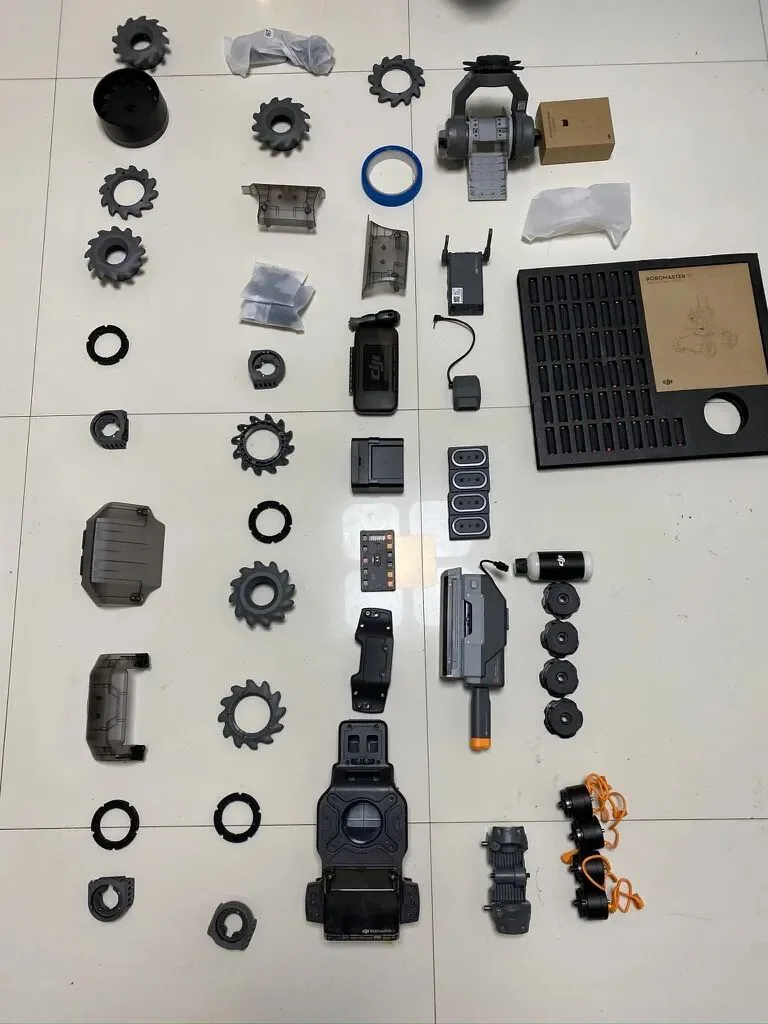
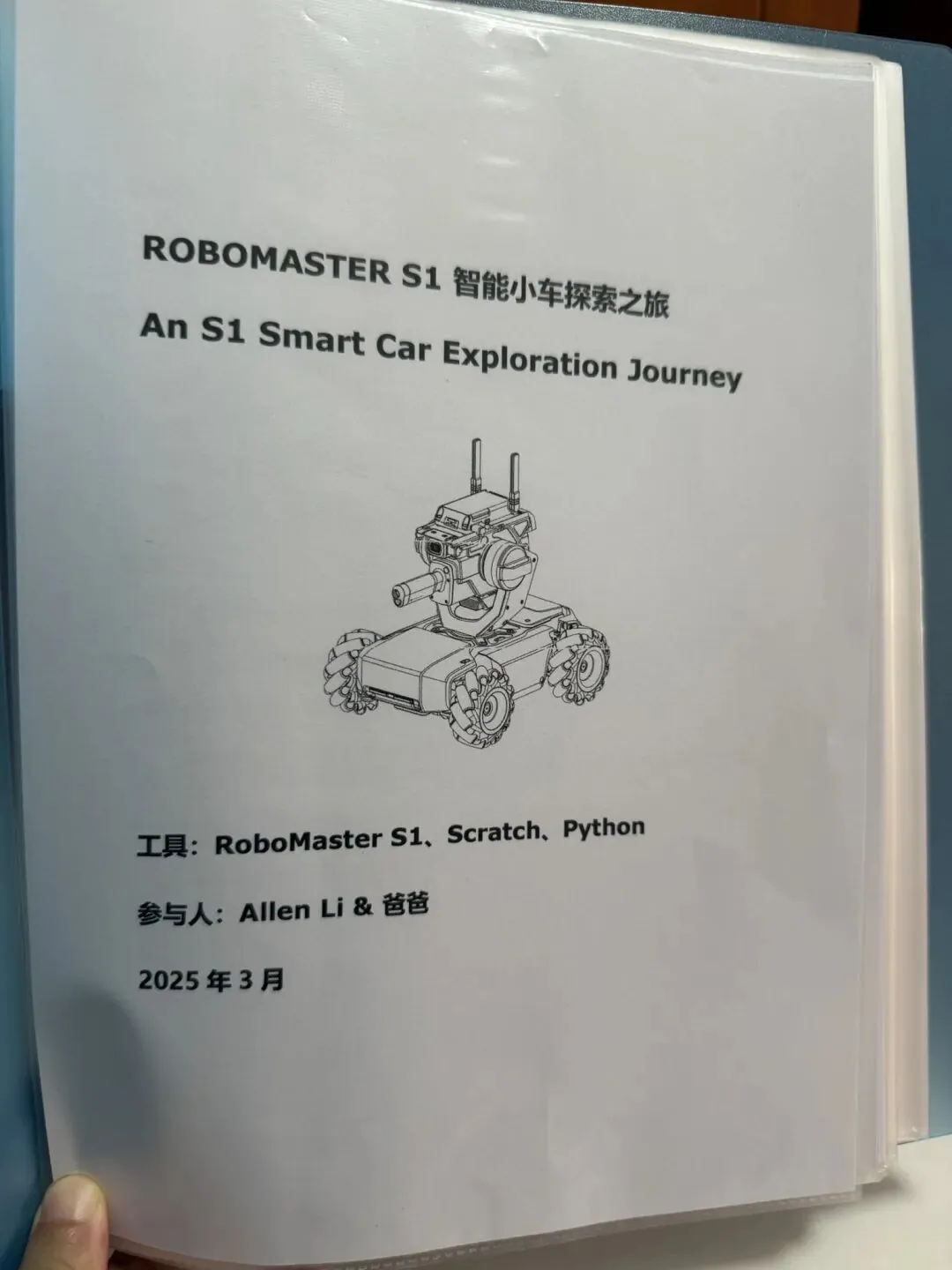
A few years ago, on an impulse, I spent a small fortune on a DJI RoboMaster S1 programmable robot. After my son played with it a few times as a remote-controlled car, it gathered dust. As he grew older, I watched his general knowledge and English improve. AI was advancing rapidly, and we were both interested in it. The unused S1 supported Scratch and Python perfectly. I felt it was time to bring it out and start learning to program together. We have no teacher, just programming mission cards we design ourselves. So far, we have taught ourselves ten lessons.
Scratch is a visual programming language developed at MIT. It is free, open source, and accessible to primary school children. Even without any coding experience, they can build and run programs by dragging blocks into place.
Scratch's official website: https://scratch.mit.edu
The RoboMaster S1 out of the box, ready to be assembled
2. Our approach: an AI coach, mission cards, and a father–son team
- Why teach robot programming yourself? Why not sign up for a class?
Programming is an important way for humans to give computers instructions. It also puts algorithms, logical thinking, and knowledge from different subjects into practice. At its heart, it is a process of solving problems. Accessible visual tools such as Scratch make programming entirely within reach of primary school children. Children are much smarter than their parents tend to imagine.
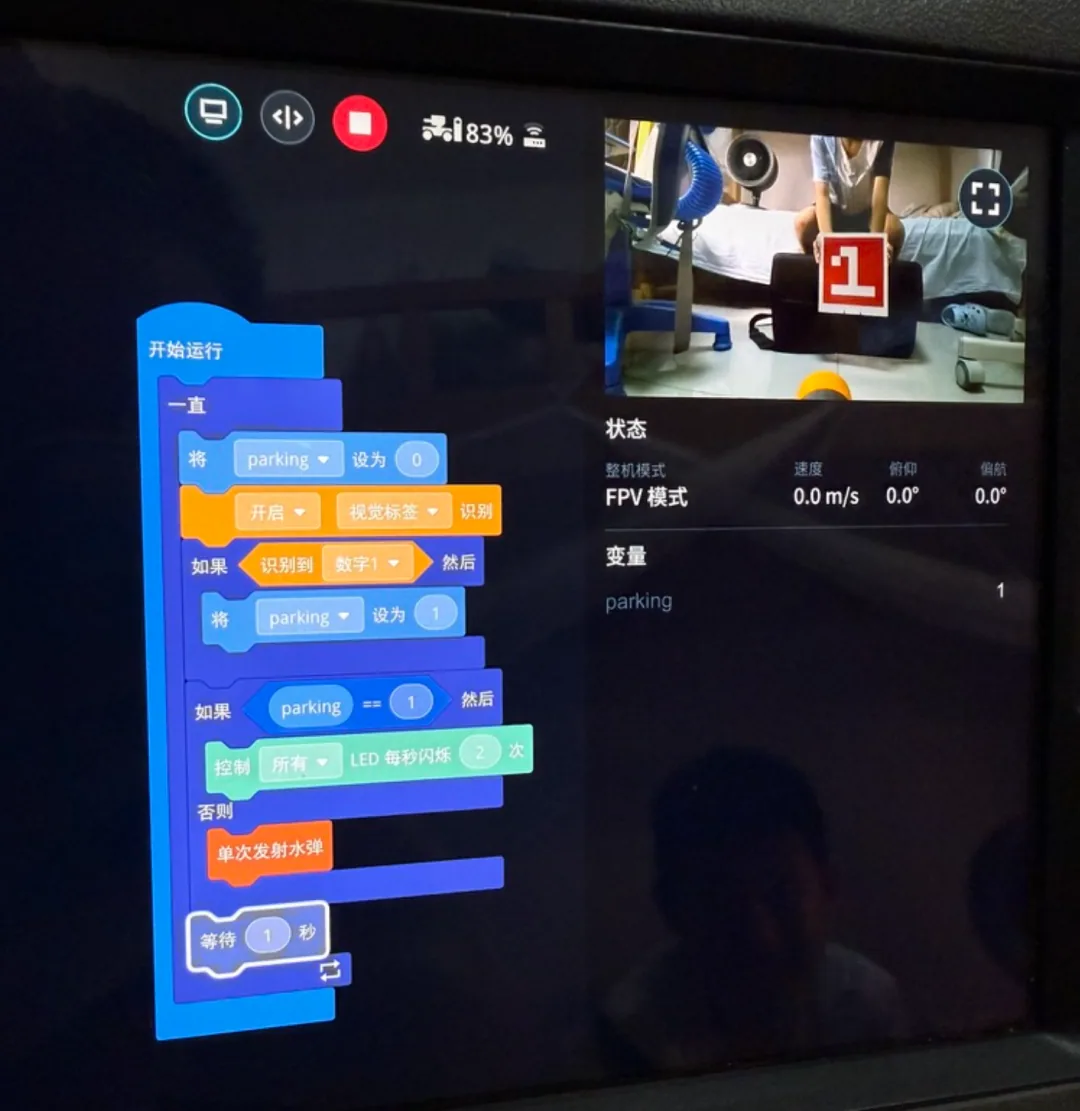
A class is an option, provided you can find an excellent teacher. Otherwise, it can waste both time and money. AI keeps getting more capable, and if we are willing to explore, it can become an excellent teacher at our side. Besides, helping a child work with AI to keep improving at a task may be more meaningful than the task itself.
The RoboMaster S1's built-in visual programming environment
- How do you design the lessons? How much time does each one take? What if we cannot keep it up?
Good lesson design starts with two things. First, the learning milestones: what level should the child reach over a given period, how will we assess it, and which abilities do we want programming to develop? Second, the child's current level; for example, AI can create a short assessment. Parents may not know the answers themselves, but if you explain the questions clearly enough, AI can offer valuable advice. Sometimes I spend a long time refining a prompt, revising it, adding context, and thinking about the real issue. That is what makes the eventual answer reasonably useful and reliable. You can also cross-check it with several models.
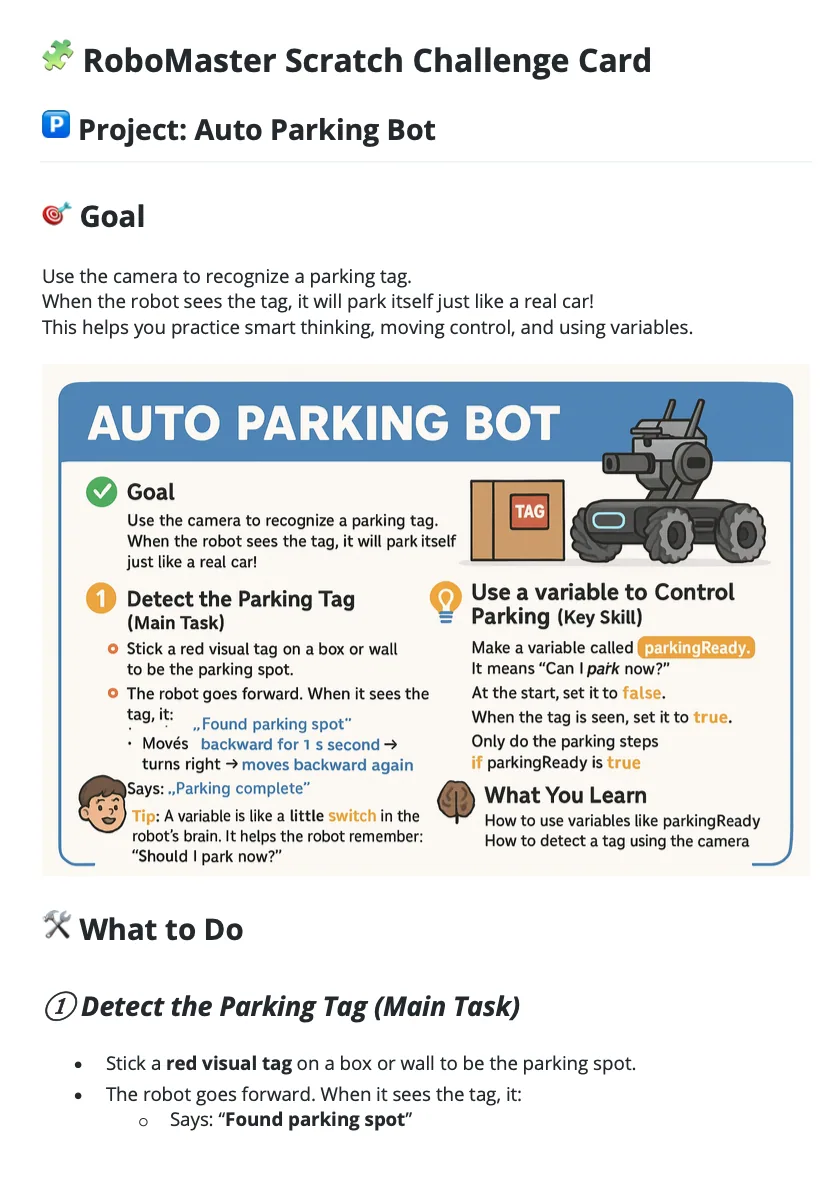
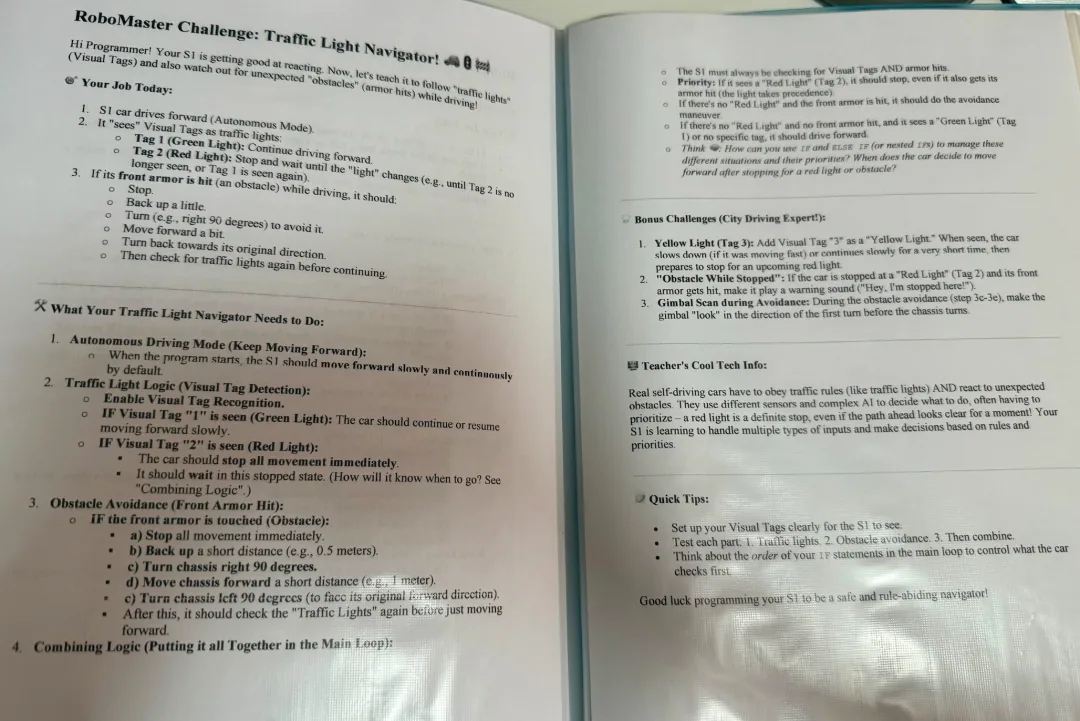
An example of a Scratch mission card for my son to complete himself
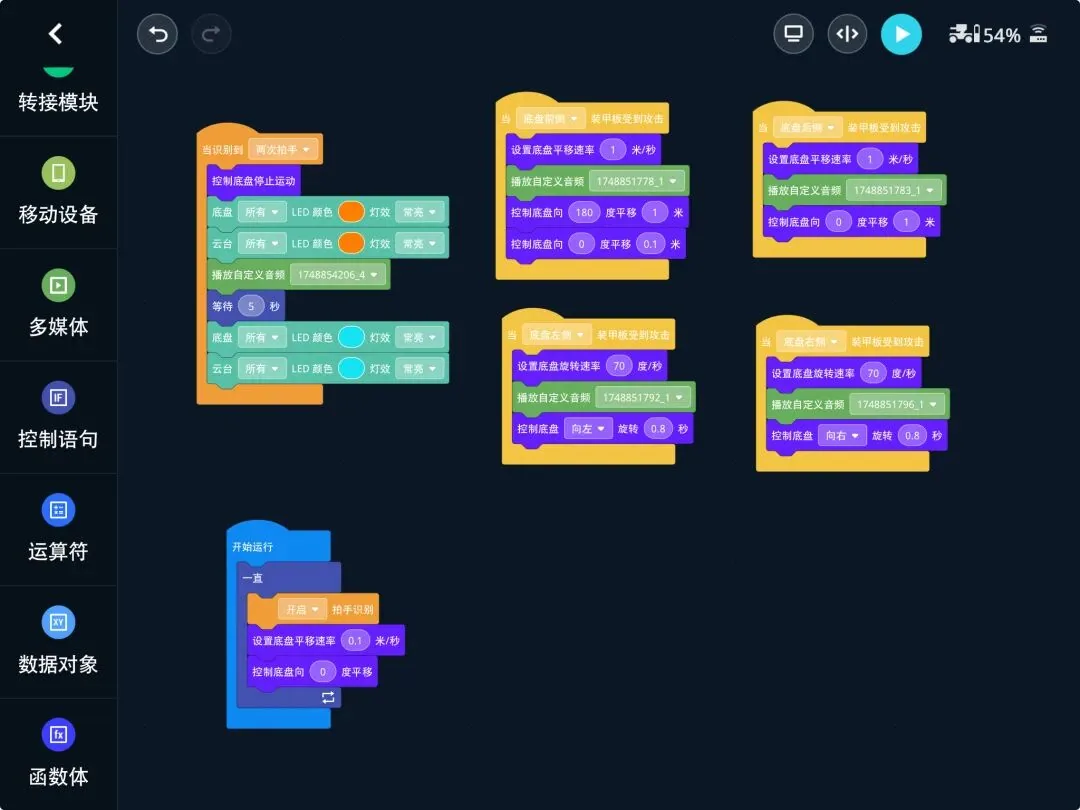
In my experience, each session should stay under 40 minutes—requirements you can give to AI—because children's patience is limited. If it becomes hard to keep going, first make sure you can stay committed yourself. Then bring the things your child loves, such as favorite games or sports, into the lessons. That can make all the difference to motivation.
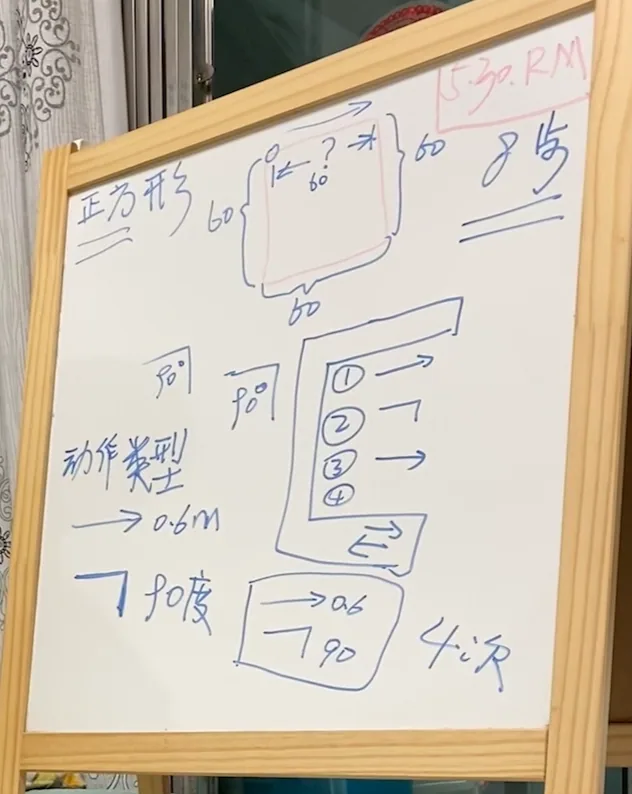
To design and teach the lessons, I used a computer, a whiteboard for explaining details, a printer for the mission cards, a programmable robot, and AI. That was all. The robot does not have to be a DJI S1; options costing a few hundred yuan are available online. If you just want to try programming for children, get the tools directly from https://scratch.mit.edu. The barrier to getting started is low. Taking action and continuing to think matter more. As I keep saying: when answers are easy to find, the ability to act becomes more valuable.
I try to explain the trickier parts to him.
- Could you do this without AI? What role does it play, and how do you make the most of it?
Given my programming and teaching skills, and the limited time I have, I really could not do this without AI. Previously, I would not even have considered it. Now I dare to try.
AI plays two key roles. It helps set the overall learning goals and syllabus, which can be tailored to anything that matters: the child's interests, progress, personality, even their mood that day. That is a fundamental difference from enrolling in a class. Even one-to-one classes are unlikely to offer fully customized teaching materials. AI also generates the specific content for each session. My son and I agreed to work through each lesson as a mission-card challenge.
We have tried to make full use of AI's capabilities. At first, our tasks were in Chinese. Later, we switched to English to work on his reading, which is a weaker area. A useful detail was telling AI his vocabulary level and asking it to stay mostly within that range. To make the tasks more engaging, I usually add diagrams and sometimes even generate videos. This helps him understand the mission and makes it more interesting, using multimodal tools such as ChatGPT image generation and Veo.
A simulation video generated with Gemini from a lesson mission card
Watch this video in the original WeChat article ↗
- What else have you gained from learning together?
Solving problems together has brought us closer. My own ability to solve problems with AI has improved too; it is excellent practical experience. I have also realized how many traditional ideas and methods in education AI could overturn. There is enormous room for possibility. After a while, we found the RoboMaster S1 no longer quite met our learning needs, so we started exploring hardware modifications. It has plenty of expansion interfaces. My son and I have even wondered whether we could build a little self-driving car ourselves.
One of our mission cards
3. Beyond programming: what AI makes us think about next
Keep using AI frequently. Find ways to use the world's strongest systems and get a feel for the pace of technological progress. Think about the bigger questions beyond the tools themselves, rather than using AI merely to stay comfortable where you are.
Since ChatGPT introduced Plus in 2023, I have continuously paid for AI subscriptions. For now, I have no loyalty to any particular tool: capability wins. After several years of frequent use, I find myself wanting to think deeply more often than ever before. That is an interesting phenomenon. AI lets us move past some basic groundwork and start considering deeper questions. Through repeated exchanges, we can develop high-quality, systematic results, then bring them into the real world for further discussion and practice. Once we are confident in a direction, the final step is decisive action.
We must also pay attention to AI's limitations. It can be unreliable in its factual and logical reasoning—hallucinations—and in its understanding of children's stages of cognitive development. Our critical thinking and supervision remain essential.
If your child likes science fiction, that is wonderful. Imagination will matter even more in the future. You can introduce books and documentaries in that area. The ability to describe the world as it is and as it could be, and to articulate your own ideas, is a quiet but powerful skill closely connected with innovation. Our children's future jobs may not even exist yet, so education can afford to look further ahead. And in this age of abundant knowledge, parents and children can learn the same things together. That is interesting in itself.
I agree that raising a child means patiently giving them time to grow. But we can also look for their interests, talk about the things they love, and bring those into learning. It makes the effort go much further.
This is only a small, early experiment in a different approach to education. If we develop better ideas or get useful results, I will record and share them. We are only just beginning ourselves. AI is not a substitute for parents' thinking; it amplifies our educational ideas and helps make up for gaps in our abilities. It gives us a way to turn each child's “I like this” into an engaging project they can learn from. In a world changing this quickly, that may be one of the best gifts we can give them.
Some of the programming mission cards we have collected along the way
Finally, happy 11th birthday, son—from your loving dad.
2025-06
Originally published in Chinese on WeChat, 南山独唱团 · Read the original ↗
NextA Beginner’s Guide to Large Models: The Essentials